Thursday, September 1, 2011

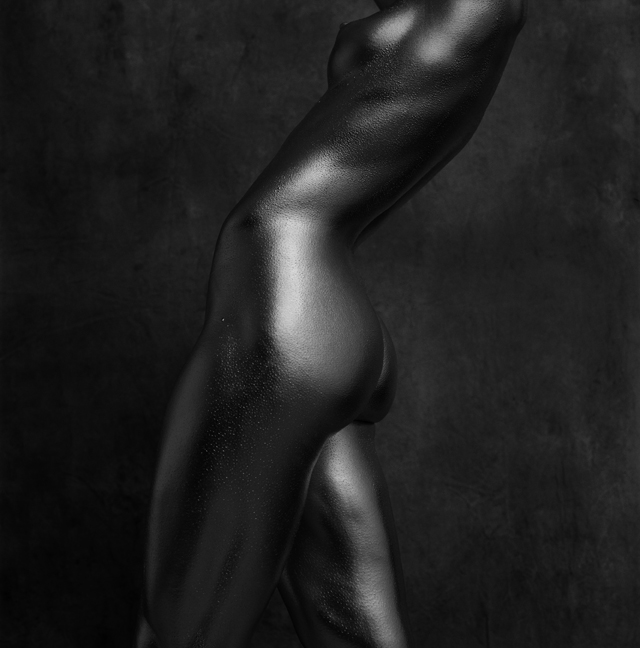
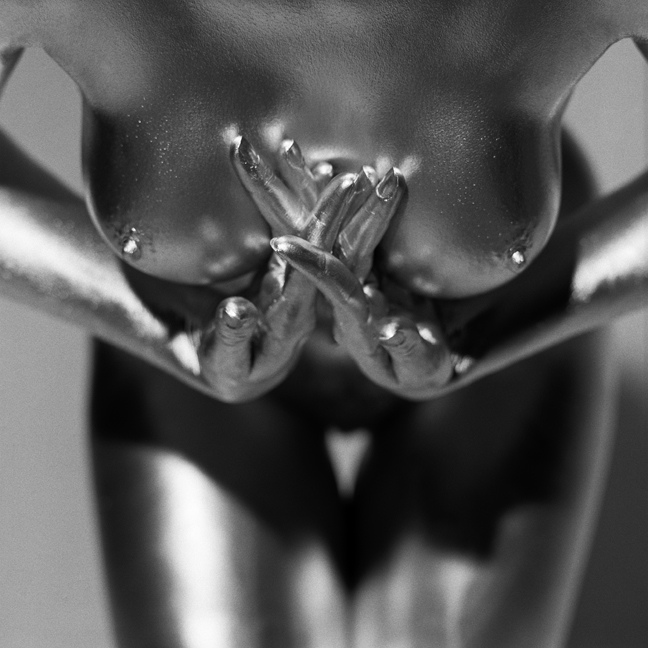
Photographer Profile ~ Guido Argentini


GUIDO ARGENTINI was born in Florence, Italy.
He studied Medicine for three years at the university of Florence. At 23 he decided to turn his passion for photography into a profession and started to shoot fashion and beauty.
Since 1990 he has lived in the USA, in Los Angeles.

His work has been published by some of the leading magazines in the world such as MarieClaire, Men'sHealth, Panorama, Playboy, Vogue, Max, Maxim and many others.






Foreign Correspondent (Alfred Hitchcock 1940) GIF


Ancestral Altars ~ By Photographer Binh Danh


Photographer Binh Danh created these beautiful “chlorophyll prints” (photographs printed onto leaves)  to honour the memory of the almost 2 million people that lost their lives to murder and famine when the Khmer Rouge forced the urban population into the countryside to fulfill their ideal of an agrarian society. Between 1975-1979 the Khmer Rouge, organized by their leader Pol Pot—arrested, tortured, and eventually executed anyone suspected of belonging to several categories of supposed "enemies," such as foreigners who were ethnic Vietnamese.


In a Security Prison coded-named S-21, which was once a schoolhouse, 14,000 men, women and children were tortured and killed. Their testimony was meticulously documented to justify their execution. When Cambodia was liberated by the Vietnamese in 1979, barely a dozen survived S-21.


'While visiting this museum, I documented much of the interior. I roamed the rooms and hallways and imagined the horror taking place in front of me. As part of the the victims' testimony, photographs were made of them. Today, what is left of the memories of these people are rooms and rooms of those portraits. The portraits are witnesses to history and they speak to us, holding us accountable. To honor these lives, I made altars of the dead—a place where we can meditate on history, the present moment, and our own mortality. I believe that even when faced with the truth that we will die someday, we can live a good life and do good for other.' ~ Binh Danh


From start to finish, his technique is this: Binh Danh begins by picking a leaf -- often from his mother's garden. To keep it from drying out, he fills a small bag with water and ties it to its stem. He places the leaf on a felt-covered board, and puts a negative directly on the leaf (he has an archive of images he's collected from magazines and purchased online). He places glass over the leaf, clips the glass and board together, and puts the assemblage on the patio roof.

Binh Danh will check the image periodically to see how it's "baking." The process can last days or weeks. Four out of five times, he's dissatisfied, and throws the leaf away. But when the chlorophyll print is right -- whether precisely rendered or eerily vague -- he takes the leaf, fixes it in resin, and frames it. [via npr.org]


Binh Danh (MFA graduate from Stanford University) has been included in important exhibitions at museums across the country, as well as the collections of the Corcoran Art Gallery, The Philadelphia Museum of Art, the deYoung Museum, and the George Eastman House, among many others.


SALT ~ Photographer Murray Fredericks

In his search for “somewhere I could point my camera into pure space,” award-winning photographer Murray Fredericks began making annual solo camping trips to remote Lake Eyre and its SALT flats in South Australia. These trips have yielded remarkable photos of a boundless, desolate yet beautiful environment where sky, water and land merge. Made in collaboration with documentary filmmaker Michael Angus, SALT is the film extension of Fredericks’ work at Lake Eyre, interweaving his photos and video diary with time-lapse sequences to create the liberating and disorienting experience of being thrown into an infinite dimension of mind and spirit.


 What I’m fascinated with is how I feel —when you stand there in the middle of a salt plane and there’s no feature, no definition – you lose a sense of scale, and you lose a sense of boundaries. Some people would feel overwhelmed or unsettled by this, but I experience a sense of freedom. What I’m trying to do is to allow the all those emotions and sensations to affect the creation of the images. A successful image will convey not just a literal space but a psychic space as well. ~ Murray Fredericks


Fredericks on the gear he used: 'One of the interesting things about this project was that it started in 2003 and ended in 2010. In 2003, digital didn’t really exist. It was on the horizon; I think you were paying 20,000 dollars for a 1.5 megapixel sensor? Once I worked out what wanted to shoot out there, I quickly found myself on 8×10 film. I chose the 8”x10” because it allowed compositions to be made out of really subtle subject matter – often just simple tonal gradations. I also knew that if the subject was ‘space’ then the exhibition prints were going to be quite large. I chose to work on negative film for the de-saturated palate.
By the end of the project, however, there was an exhibition at Hamiltons Gallery in London, which was two five meter panoramic prints, and they were shot with ‘stitched’ medium format digital back files. One image was eight frames stitched, and the other was 12 frames stitched. This approach was used to widen the field of view. I was continually pushing the project, trying to find new ways of conveying this sense of space and these advances in digital technology opened up possibilities here that were not available using film cameras. On a single-frame shot, there’s only so wide you can go before the lens starts ‘pulling’ the edges so much that the viewer becomes aware of the ‘stretch’. When the viewer is wondering about the photographer’s technique before the central message of the image then I think the image has failed. ' [via f-stop magazine]


Edward Steichen


Edward Steichen


Después del Grand Prix-París, 1907


The Metropolitan Museum of Art